
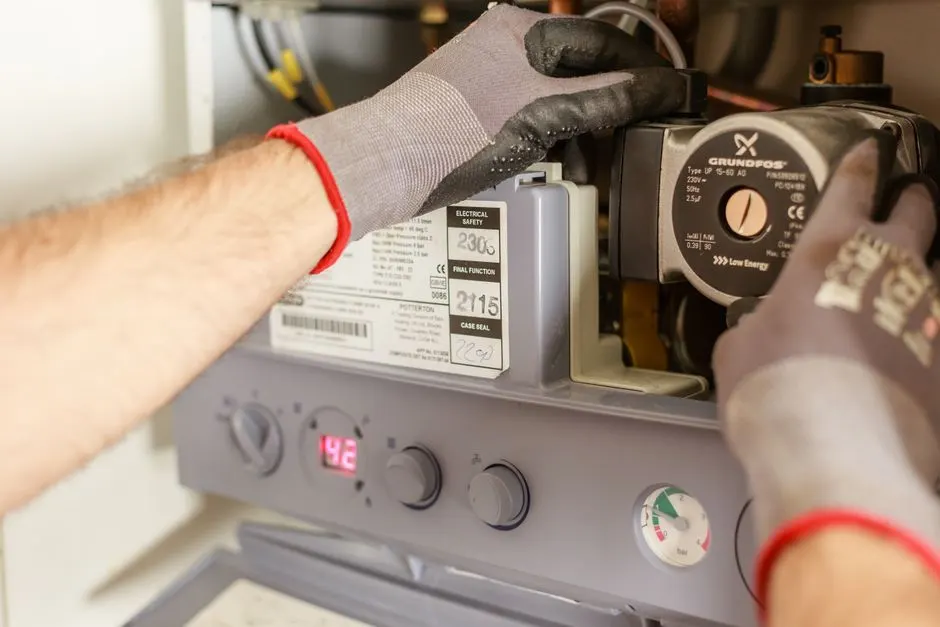
To clean a furnace flame sensor step by step, shut off power and gas, remove the sensor retaining screw, polish the metal rod with fine steel wool or a dollar bill, wipe it clean, reinstall it, and restore power to test. The whole job takes 15 to 25 minutes on most furnaces. A flame sensor is a safety rod that proves a flame is present; when soot or oxidation coats it, the furnace lights for 3 to 7 seconds and then shuts down. Below is the exact process our technicians use across Pennsylvania, plus the symptoms that point to a dirty sensor and the mistakes that turn a 20-minute fix into a weekend of cold rooms.
What a Flame Sensor Does and Why It Gets Dirty
A flame sensor is a small metal rod mounted in the burner flame path that sends a microamp signal back to the control board whenever it detects fire. If that signal drops below roughly 1 to 2 microamps, the board cuts gas within seconds to prevent a gas buildup. That is why the furnace ignites, runs briefly, and then quits.
The rod sits directly in the flame, so it collects carbon soot, dust, and a thin oxide layer every heating season. In Pennsylvania, where furnaces run hard from October through April, that coating builds faster than in milder states. A sensor that read 4 microamps in November can drop to 0.5 by February and start tripping the board.
If you are not comfortable pulling parts out of a gas appliance, our team handles Furnace Repair in Pennsylvania every day and can clean or replace the sensor on a single visit.
Tools and Safety Before You Start
Gather everything before you touch the furnace so you are not running to the garage mid-job with the panel off. You need very few tools.
- 1/4-inch nut driver or a screwdriver that fits the sensor screw
- Fine steel wool (0000 grade) or a crisp dollar bill
- Clean rag or paper towel
- Flashlight or phone light
- Multimeter (optional, for testing microamps)
Safety first: turn the thermostat to OFF, flip the furnace power switch (usually a light switch on the side of the unit), and close the gas shutoff valve on the supply line. Wait 5 minutes for any residual gas to clear. Never clean a sensor while the furnace is calling for heat.
If you smell gas at any point, stop and leave the house. Call your gas utility from outside. A flame sensor cleaning is never worth risking an ignition.
How to Clean a Furnace Flame Sensor Step by Step
Here is the process in order. Work slowly and keep track of every screw.
- Kill power and gas. Thermostat off, furnace switch off, gas valve closed. Confirm the blower stops.
- Remove the burner access panel. Usually two 5/16-inch screws at the top. Set the panel aside.
- Locate the flame sensor. It is a single metal rod, roughly 3 to 4 inches long, mounted near the burners with one screw and one wire. It is not the igniter, which is usually a flat ceramic element.
- Disconnect the wire. Pull the spade connector straight off the sensor. Do not yank the wire.
- Remove the retaining screw. Hold the sensor so it does not drop into the burner compartment.
- Polish the rod. Rub the metal portion with fine steel wool or a dollar bill until it is shiny. Do not touch the ceramic insulator with steel wool.
- Wipe it down. Use a clean rag to remove any steel wool fibers or residue. Fibers left on the rod can cause a false reading.
- Reinstall. Same screw, same position. The rod must sit in the flame path exactly where it was.
- Reconnect the wire. Push the spade connector fully onto the terminal.
- Restore power and gas, then test. Replace the panel, turn the gas valve back on, flip the switch, and call for heat at the thermostat. Watch the burner through the sight glass. The flame should stay lit and the blower should come on within 30 to 90 seconds.
If the furnace still short-cycles after cleaning, the sensor is likely worn past the point of polishing. A replacement sensor runs $10 to $30 for the part, and we stock common sizes for Furnace Replacement in Pennsylvania jobs and service calls alike.
Furnace Flame Sensor Dirty Symptoms Pennsylvania Homeowners Notice
The symptoms of a dirty flame sensor are consistent across brands, and they almost always follow the same pattern.
- Burner lights, then shuts off after 3 to 7 seconds
- Furnace tries to ignite 3 times, then locks out
- Blower runs cold air for a few minutes, then stops
- Error code on the control board LED, often 3 or 4 flashes
- Short cycles every 10 to 15 minutes during a call for heat
In older Philadelphia rowhouses and Pittsburgh mill-era homes, we see this most often in January and February when the furnace runs 12 to 16 hours a day. If you are in one of those neighborhoods and your heat keeps dropping out, our Furnace Repair in Philadelphia and Furnace Repair in Pittsburgh crews carry sensors on the truck so we can fix it on the first visit.
If the sensor is clean and the furnace still will not stay lit, the problem is usually elsewhere: a weak igniter, a failing control board, a cracked heat exchanger, or low gas pressure. That is when a Furnace Maintenance in Pennsylvania visit pays for itself, because we can test all of those in one trip instead of guessing.
Common Mistakes to Avoid
Most failed DIY flame sensor cleanings come down to one of these five errors.
- Using sandpaper or emery cloth. Both scratch the rod and leave grit that causes a worse signal than the soot you removed.
- Touching the rod with bare fingers. Skin oils bake onto the metal and create a new insulating layer within a week.
- Bending the sensor. The rod has to sit in the flame at the exact angle it was designed for. A bent rod reads low even when it is clean.
- Cleaning the igniter instead. The igniter is ceramic and fragile. Steel wool destroys it. If you are not sure which part is which, stop and call us.
- Forgetting to restore the gas valve. The furnace will not fire and you will think the cleaning failed.
One more: do not skip the test cycle. A furnace that lights once is not proof the sensor is fixed. Watch it run through at least two full heating cycles before you call it done.
When to Call a Professional
Call a professional if the furnace locks out after cleaning, if you see a cracked or discolored heat exchanger, if the sensor wire is frayed, or if you are not comfortable working around gas. We also recommend a pro visit if the sensor has been cleaned twice in one season, because that usually means a combustion problem is producing excess soot.
Furnace Pros Pennsylvania handles flame sensor cleaning, testing, and replacement across the state. We test microamp readings with a meter, not by eye, so you know the sensor is actually fixed before we leave. If the sensor is fine and something else is causing the lockout, we diagnose it on the same visit.
Frequently Asked Questions
How do I clean my furnace flame sensor in Pennsylvania?
Shut off power and gas, remove the sensor screw, polish the metal rod with 0000 steel wool or a dollar bill for about 60 seconds, wipe it clean, reinstall it, and restore power. The job takes 15 to 25 minutes on most furnaces.
Why does my furnace flame sensor get dirty in Pennsylvania?
Pennsylvania furnaces run 5 to 7 months a year, so the rod collects carbon soot and oxide faster than in milder states. Dusty basements and older ductwork speed it up. Most sensors need cleaning once per heating season here.
How often should I clean my furnace flame sensor in Pennsylvania?
Once a year, ideally in September or October before the first cold snap. If your furnace short-cycles mid-winter, clean it again. Twice in one season points to a combustion issue that needs a pro.
Can I clean a furnace flame sensor myself in Pennsylvania?
Yes, if you are comfortable removing a panel and a single screw on a gas appliance. If you smell gas, see a cracked heat exchanger, or the furnace still locks out after cleaning, stop and call a licensed technician.
What happens if I don't clean my furnace flame sensor in Pennsylvania?
The furnace will keep short-cycling, then lock out entirely on a cold night. You will get no heat, the blower will run cold air, and the control board may eventually need replacement from repeated failed ignition attempts.
Get Help with Furnace Repair in Pennsylvania
If your furnace lights and quits, or you would rather have a technician handle the flame sensor and check the rest of the system while he is there, call Furnace Pros Pennsylvania at (833) 586-3803. We clean, test, and replace flame sensors across Pennsylvania, and we tell you the price before we start.